
By coincidence, I just happened to be watching THE HUMANITY BUREAU (2017) last night. I say coincidence since I had no idea this low budget Nicholas Cage film was a fever dream for right-wing conspiracy types, so watching it, I felt like I was getting a glimpse of their thought world in the aftermath of last week’s real-life insurrection.

A political logo for the Biden/Harris 2020 campaign in the US General Election, using Yiddish orthography.

An escutcheon (shield herald) for the landscape and lore of my imagination.

Last night, I finished a year long project begun after Simḥat Torah in 2018, presenting the Masoretic Hebrew text of the parashot (weekly Torah readings) with English translation in a range of colors according to the way the narrative layers are parsed through the Supplementary hypothesis as read by Dr. Tzemah Yoreh, published in his Kernel to Canon series of books (2013-2017) and on his website, the Sources of Biblical Narrative. The version of the Masoretic text used is Dr. Seth Avi Kadish’s Miqra al pi ha-mesorah published at Hebrew Wikisource.

A helpful astrological reference explaining how the gloss of Zodiacal periods on the calendar is witness to the position of the Earth a couple thousand years ago and there’s been a certain degree of calendrical drift since then.
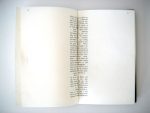
I sought without success for instructions on how to modify the gutter width, to adjust the inner margins of pages in a PDF so that they may be printed properly. So I had to figure it out myself. This is the solution I’ve devised for use with Adobe Acrobat Professional.

I would like to add to what many people are saying about the vacuous offering of “thoughts and prayers” after deliberate, predictable, and avoidable tragedies, without, I hope, sounding contrarian. Immersed as I’ve been for the last decade in prayer literature directing the Open Siddur Project, I want to say something in general about prayers, […]

I do believe that periodically, it is worthwhile to reflect on whether one’s religious practice is nurturing one’s creativity, curiosity, and compassion or yet another grim prism/prison through which our perception of the Cosmos and our fellow inhabitants is terminally circumscribed, or worse: a worldview and ethos sanctioning for us the willful harm, oppression, and even predation of other beings.

Rabbi Schwartz asked prospective participants in his “Kenissa: Community of Meaning Network” to respond to his chapter, and in particular how our initiatives are aligned with one (or more) of the four propositions he offers to heading off the crises facing the American Jewish community, and in what ways they advance an area of Jewish life or practice outside of those propositions. Here was my response as founding director of the Open Siddur Project and co-founder of Open-source Judaism.

My friend Brian and I viewed BLADE RUNNER (henceforth, BR2049) last Thursday. Our discussion, animated by a bit of delirium on my part (dehydration plus lack of sleep), helped to process my lingering combination of amazement and disappointment following end credits. (I’ll give a half-hearted spoiler alert now — the sort I’d appreciate before being […]
|
